
Why ChUV Skips Beta Carotene: The Carotenoid That Causes Unnatural Orange Tinting

Tanning supplements are not all the same. Many formulas rely on beta carotene as their active carotenoid, and that single ingredient choice is responsible for the unnatural orange or yellowish tinting that gives the entire category a bad reputation. Here is what separates a natural warm glow from a cosmetic mistake.
What Is Beta Carotene and Why Do Some Supplements Use It?
Beta carotene is a red-orange pigment found in carrots, sweet potatoes, and other plant foods. In the supplement market, it became a popular tanning aid because it deposits in skin tissue and shifts complexion. The mechanism is simple: beta carotene accumulates in the outermost skin layers, particularly in fat-dense areas, and gradually changes skin color over time.
Manufacturers use beta carotene because it is inexpensive, widely available, and produces a visible color change quickly. However, the color is rarely what consumers expect. Beta carotene concentrates heavily in the palms, soles, and nasolabial folds, producing an uneven, yellowish-orange tint that looks nothing like a natural tan. That uneven distribution is what sets beta carotene apart from more targeted carotenoid approaches, and it is the reason so many buyers have walked away from tanning supplements entirely after their first experience.
Carotenemia: The Clinical Name for the Beta Carotene Problem
The clinical term for beta carotene-induced skin discoloration is carotenemia. A review by Maharshak, Shapiro, and Trau, published in the International Journal of Dermatology in 2003, documented carotenemia as a well-recognized dermatological condition caused by excessive beta carotene intake or tissue accumulation.
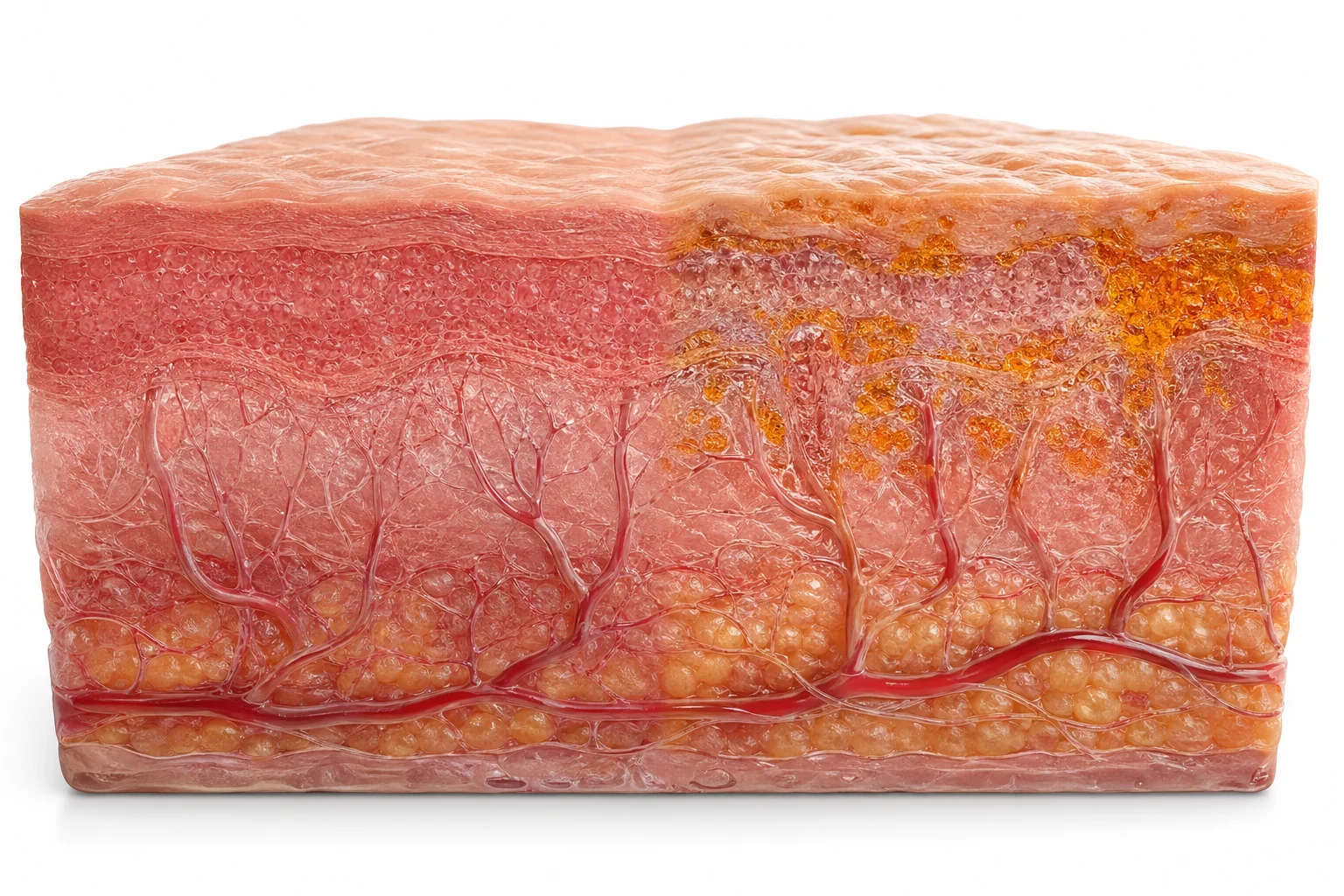
When beta carotene intake exceeds the body's conversion capacity, the excess stores in adipose tissue and deposits in the stratum corneum, the outermost skin layer. Because beta carotene is a yellow-orange pigment, this process creates an unnatural yellowish-orange tinting that has no resemblance to a sun-kissed glow. Carotenemia is most visible on light skin tones and in areas with higher sebaceous activity, and it can take several weeks to reverse after stopping supplementation.
For consumers buying a tanning supplement before a vacation or event, discovering orange palms as the result is a serious outcome. Beta carotene cannot be titrated the way more selective carotenoids can, and the deposition pattern is not cosmetically controllable.

Meet ChUV
The tanning gummy the article is about.
One daily gummy. Warm, natural tone in weeks. No UV, no beta carotene, no gimmicks.
- Clinical doses of astaxanthin + lycopene
- Visible warmth by week 3-4, peak at week 8
- Vegan, non-GMO, made in the USA
How Astaxanthin and Lycopene Work Differently
ChUV is formulated around two carotenoids with distinct mechanisms and distinct cosmetic outcomes: astaxanthin from Haematococcus pluvialis and lycopene. Neither produces the unnatural yellowish-orange tinting associated with beta carotene.
Research by Tominaga and colleagues, published in Acta Biochimica Polonica in 2012, found that oral astaxanthin supplementation in healthy female subjects led to measurable improvements in skin texture, elasticity, and a warm, healthy skin tone. Unlike beta carotene, astaxanthin does not accumulate in fatty tissue in a pattern that creates visible orange deposits. Its deposition profile supports a richer, warmer skin shift that reads as natural.
Lycopene, the red carotenoid concentrated in tomatoes and other red fruits, has been studied for both photoprotective properties and skin tone support. Research by Stahl and colleagues, published in the Journal of Nutrition in 2001, found that lycopene from tomato paste consumption increased skin resistance to UV-induced redness and supported a more even baseline complexion.
Together, astaxanthin and lycopene build toward a natural warm glow that develops gradually over four to eight weeks, without the patchy, uneven tinting that beta carotene delivers.
Why the Formula Decision Matters for Real Results
The difference between a natural warm glow and an unnatural yellowish-orange tinting comes down to which carotenoid is doing the work. Beta carotene deposits where it wants, in concentrations that can quickly exceed what looks natural. Astaxanthin and lycopene work within the skin's existing biology rather than overwhelming it.
This distinction matters for buyers comparing labels. Understanding the beta carotene problem puts you ahead of most consumers in this category. ChUV's formula removes the guesswork: each dark reddish-purple sugar-coated cube delivers the astaxanthin and lycopene combination, one gummy per day. The result builds gradually over four to eight weeks toward a natural sun-kissed tone that comes from the right pigments working at the right depth.
The formula decision is not just a marketing choice. It reflects what the science on carotenoid deposition actually supports when the goal is a natural outcome rather than a rapid, visible, and often regrettable color shift.
What to Look for on a Tanning Supplement Label
When evaluating any tanning supplement, the label is your first filter. These signals separate formulas likely to deliver a natural warm glow from those that risk the beta carotene outcome:
Carotenoids that support a natural result:
- Astaxanthin (especially from Haematococcus pluvialis)
- Lycopene
Ingredients that signal potential unnatural tinting:
- Beta carotene listed as the primary or only active carotenoid
- Carrot extract or carrot powder, both high in beta carotene
- High-dose synthetic carotenoid blends without published clinical support
Formulation signals worth checking:
- One serving per day for controlled, consistent dosing
- A four-to-eight week expected timeline, not overnight promises
- Clean label without unnecessary colorants or fillers
If a tanning supplement places beta carotene first on the active ingredient list and promises fast color results, the fast result is likely carotenemia.
Frequently Asked Questions
Does beta carotene make your skin orange?
Yes, at higher doses or with consistent supplementation. Beta carotene is a yellow-orange pigment that accumulates in the outer skin layers, particularly in fat-dense areas. The result is carotenemia: an unnatural yellowish-orange tinting most visible on palms, soles, and around the nose and mouth. The effect is dose-dependent and can take several weeks to clear after stopping beta carotene supplementation.
Why does ChUV use astaxanthin and lycopene instead of beta carotene?
Astaxanthin and lycopene produce a different skin deposition profile than beta carotene. Research supports these carotenoids for a warm, even skin tone rather than the patchy yellow-orange effect associated with beta carotene overload. ChUV uses these two carotenoids specifically because they align with the natural warm glow the product is designed to deliver, without the cosmetic downside tied to beta carotene supplementation.
How long does ChUV take to work?
Most users begin to notice a shift in skin tone between four and eight weeks of daily use. Each dark reddish-purple sugar-coated cube delivers one serving per day. Results vary depending on baseline skin tone, sun exposure, and individual carotenoid metabolism. Consistent daily use over the full four-to-eight week window produces the most noticeable outcome.
Is carotenemia from beta carotene dangerous?
Carotenemia is considered clinically benign. The discoloration reverses when beta carotene intake drops, typically over several weeks. Because carotenemia can visually resemble jaundice in certain presentations, it occasionally causes unnecessary concern. Any unexpected changes in skin color are worth confirming with a physician to rule out other causes before attributing them to supplementation.
Can I ask questions about ChUV before buying?
Yes. If you have questions about how ChUV fits with your current supplement routine, your specific skin tone goals, or what to expect during the four-to-eight week buildup period, the CAYO Nutra team is available to help. Reach out directly through the CAYO Nutra contact page before you start.
Ready for a Glow That Does Not Come From a Carrot?
The beta carotene problem is why so many buyers gave up on tanning supplements after one bad experience with orange palms. ChUV is built on a different standard: astaxanthin and lycopene only, one dark reddish-purple sugar-coated cube per day, and a natural sun-kissed tone that builds over four to eight weeks. If you are ready to see what the right carotenoids actually deliver, ChUV tanning gummies are the logical next step.
The Timeline
Watch the glow build.
Scrub through eight weeks on ChUV. Pigment saturation, biology, and the moment the shift becomes visible, week by week.
Serum carotenoid levels rising. Antioxidant activity active.
The carotenoids load.
Astaxanthin and lycopene enter systemic circulation and begin to deposit in dermal tissue. You will not see the shift yet. The biology is running underneath.
11mg
Astaxanthin daily
5.5mg
Lycopene daily
7days
Consistent dosing
The shift goes visible.
Dermal saturation reaches the threshold where warmth reads in natural light. Face, chest, and forearms register first. Subtle, not staged. Sun-kissed, never painted.
62%
Carotenoid saturation
2-3tones
Visible warmth gained
28days
Consistent dosing
Full steady state.
Even distribution across skin tissue, a warm baseline that holds as long as you stay on the daily dose. This is the ChUV finish line and the starting point of the maintenance phase.
96%
Carotenoid saturation
1gummy
To hold the tone
56days
Consistent dosing
Built around the clinical-study window. The shift is gradual on purpose: the color reads natural because it builds like a real tan.
4.8/5 from 2,300+ reviews
What customers actually say.
Questions, answered
FAQ
How long before I see results?
Most people notice a warm tone by week 3-4, with full results at 8 weeks on one gummy daily.
Do tanning gummies work?
Yes. Carotenoid pigmentation is a well-documented pathway. ChUV uses astaxanthin and lycopene, both clinically studied for skin coloration.
Will ChUV turn me orange?
No. ChUV uses astaxanthin and lycopene at measured doses for a natural warm tone. Beta carotene is the ingredient that causes orange discoloration, and we refuse to use it.
Does ChUV replace sunscreen?
Astaxanthin offers real internal photoprotection by neutralizing UV-induced free radicals at the cellular level. For prolonged outdoor exposure, pair ChUV with topical SPF. Think of them as complementary.
What if I don't tan?
You don't need the sun to tan with ChUV. Carotenoid pigmentation deposits astaxanthin and lycopene directly into dermal tissue, producing a warm tone without UV. Sun exposure makes the effect richer. Astaxanthin and lycopene are photoprotective antioxidants, so pairing ChUV with moderate sun yields a deeper, more saturated tan than either alone.
Is ChUV safe to take daily?
Yes. ChUV is made in a GMP-certified facility in the USA, contains no artificial dyes, and is formulated at doses supported by clinical literature.
Can I take ChUV with other supplements?
Generally yes. Astaxanthin and lycopene are fat-soluble, so take ChUV with a meal that contains some healthy fat for best absorption.
How is ChUV different from other tanning supplements?
Most tanning gummies rely on beta carotene, which produces an unnatural orange cast at supplement doses. ChUV stacks clinically-studied astaxanthin and lycopene for a natural warm tone.
Does ChUV contain allergens?
ChUV is vegan, non-GMO, gluten-free, and free of the major allergens. See the full supplement facts panel on the product page.
How does shipping work?
Subscriptions ship free. One-time orders ship at standard domestic rates. Orders leave our fulfillment facility within 1 to 2 business days.
When should I expect to see results?
Most people see a first noticeable warmth in weeks 3-4 and full tone expression by week 6-8. Carotenoid pigmentation is cumulative, so consistent daily use matters more than dose stacking.
Do I need to keep taking ChUV to keep my color?
Yes. Carotenoid accumulation is gradual, and so is the fade. Daily use keeps your tone consistent.
Ready to start?
One gummy a day. Four weeks to visible warmth.
Join thousands already building their glow with ChUV. Subscribe and save 10%, skip or cancel anytime.