
Lycopene for Skin: Benefits Beyond Just Tomatoes

What Is Lycopene and Why Skin Health Depends on It
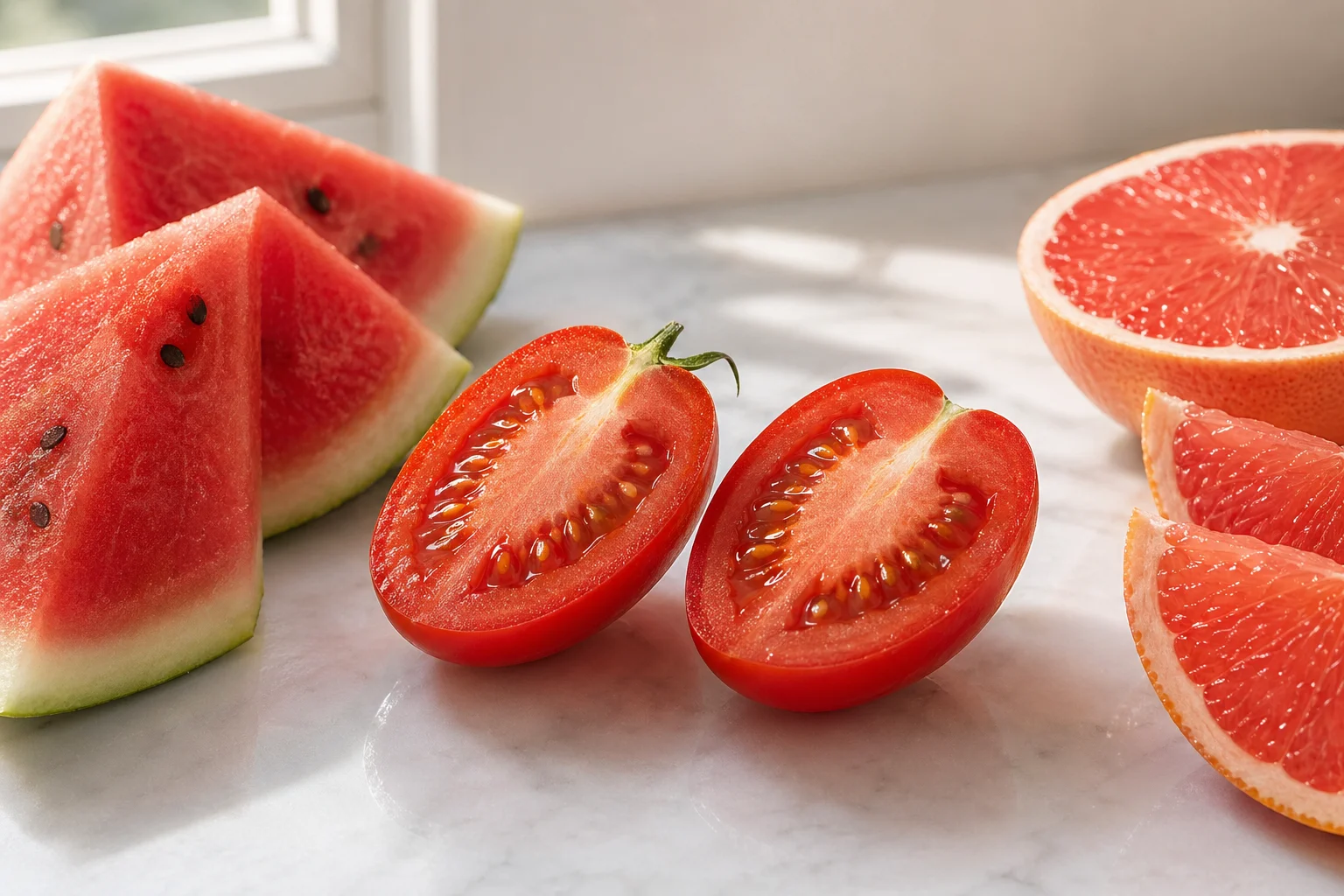
Lycopene is a red carotenoid pigment found in tomatoes, watermelon, pink grapefruit, and guava. That vivid red color is the pigment itself, and its natural antioxidant properties make it one of the most effective defenders against oxidative stress in skin cells. Because lycopene is fat-soluble, it absorbs directly into cell membranes, the precise location where free radicals do the most structural damage.
Unlike water-soluble antioxidants that flush through the system quickly, lycopene accumulates in skin tissue with consistent daily intake. Research by Stahl, Heinrich, and colleagues published in the Journal of Nutrition (2001) confirmed that regular lycopene consumption measurably reduces UV-induced skin redness, a direct marker of cellular oxidative damage. That accumulation is what makes lycopene a long-game ingredient for skin health rather than a short-lived compound.
How Free Radicals Damage Skin Cells
Free radicals are unstable molecules generated by UV exposure, air pollution, cigarette smoke, and normal cellular metabolism. These reactive species attack skin cells, oxidize lipid membranes, damage DNA, and degrade collagen. The cascading effect of unchecked free radical activity is one of the primary mechanisms behind premature aging, uneven skin tone, and loss of structural integrity in the dermis.
Lycopene is especially effective at neutralizing singlet oxygen, one of the most damaging forms of free radicals generated during sun exposure. Rao and Rao, writing in Pharmacological Research (2007), highlighted lycopene's exceptional capacity to quench singlet oxygen among dietary carotenoids, placing it among the most valuable internal antioxidants for reducing UV-related oxidative damage to skin.

Meet ChUV
The tanning gummy the article is about.
One daily gummy. Warm, natural tone in weeks. No UV, no beta carotene, no gimmicks.
- Clinical doses of astaxanthin + lycopene
- Visible warmth by week 3-4, peak at week 8
- Vegan, non-GMO, made in the USA
Lycopene Skin Benefits for Collagen and Long-Term Texture
Collagen gives skin its firmness, texture, and structural resilience. When free radicals break down collagen faster than the body can synthesize new fibers, the result is visible aging, loss of elasticity, and a dull complexion. Lycopene helps interrupt this cycle by intercepting free radicals before they reach collagen at the cellular level.
Lycopene also plays a direct role in photoprotection. Studies have shown that higher skin lycopene concentrations correlate with stronger antioxidant defenses and reduced oxidative stress markers after UV exposure. This internal layer of protection builds gradually with daily supplementation, improving your baseline defense over 4 to 8 weeks rather than delivering immediate effects.
The relationship between lycopene and aging skin is worth understanding in depth. Lycopene's role as a singlet oxygen quencher means it specifically targets the free radical type most responsible for photoaging: the sun-triggered accelerated aging that manifests as fine lines, hyperpigmentation, and reduced skin density. By keeping these radicals in check at the cellular level, lycopene helps maintain the conditions under which skin can repair and regenerate normally.
Why Topical Skincare Products Cannot Reach Deep Enough
The skincare market offers an enormous range of serums, creams, and topical products. These can deliver real surface-level benefits including hydration, exfoliation, and temporary tone improvements. But when you read the clinical data on topical versus oral carotenoid delivery, a consistent pattern emerges: internal supplementation produces measurable increases in skin carotenoid concentrations, while topical application shows far more variable and limited penetration below the epidermis.
Oral lycopene reaches the bloodstream and distributes to the dermis, the deep structural layer where collagen lives and where most photoaging occurs. Unlike topical products, oral lycopene can protect the fibroblast cells that synthesize collagen and reduce the oxidative environment that accelerates skin degradation. For lasting skin health improvements, internal carotenoid support is not a replacement for your skincare routine. It is a deeper layer of protection those products cannot replicate.
How ChUV Combines Lycopene with Astaxanthin for a Natural Glow
ChUV tanning gummies pair lycopene with astaxanthin, the most potent carotenoid antioxidant documented in peer-reviewed literature. These two compounds target complementary pathways in skin protection and tone development. Astaxanthin delivers broad-spectrum antioxidant coverage and is the key driver behind the natural warm glow ChUV users develop over 4 to 8 weeks of consistent daily use. Lycopene adds focused depth, helping reduce oxidative damage to collagen and reinforcing skin's antioxidant defenses at the cellular level.
This dual-carotenoid formula is what separates ChUV from single-ingredient supplements. One dark reddish-purple sugar-coated cube per day builds a cumulative antioxidant foundation that grows stronger with every dose. No unnatural yellowish-orange tinting, no artificial color additives, just the natural warm glow that comes from giving your skin what it needs internally.
Frequently Asked Questions
How long does lycopene take to improve skin?
Lycopene builds up in skin tissue gradually with consistent daily intake. Research suggests measurable increases in skin carotenoid levels occur within 4 to 8 weeks of regular supplementation. Visible improvements in skin tone, reduced redness after sun exposure, and overall luminosity become more apparent the longer you maintain a daily routine. Consistency is the most important variable in how effective lycopene supplementation is for your skin.
Is lycopene from supplements more effective than from tomatoes?
Lycopene from cooked tomatoes is highly bioavailable because heat breaks down cell walls, making lycopene more accessible for absorption. Supplements concentrate lycopene from whole-food sources and deliver a consistent, measured daily dose without requiring large quantities of tomatoes. For targeted lycopene skin benefits, supplementation provides reliable, predictable intake that dietary sources alone often cannot guarantee.
Can lycopene protect skin from sun damage?
Lycopene supports internal antioxidant protection against UV-triggered oxidative stress, but it does not block UV radiation the way sunscreen does. Think of it as reducing the cellular damage that sun exposure causes from within. Sunscreen prevents UV from penetrating the skin surface. Both serve different and complementary roles in a complete skin health strategy, and consistent lycopene intake strengthens the antioxidant defenses already working inside your skin.
Does lycopene cause unnatural skin discoloration?
No. Lycopene does not produce unnatural yellowish-orange tinting in the skin. That effect is associated with beta carotene, a different carotenoid not found in ChUV. Astaxanthin and lycopene together support a natural sun-kissed tone, a healthy warm glow that reflects genuine carotenoid accumulation in skin tissue rather than artificial color.
What foods are richest in lycopene?
Tomatoes in cooked and processed forms, like tomato paste and sauce, are the most concentrated dietary lycopene source because cooking breaks down cell walls and significantly improves bioavailability. Other lycopene-rich foods include watermelon, pink grapefruit, guava, and red bell peppers. Because lycopene is fat-soluble, consuming these foods with healthy fats improves absorption. Supplementation offers a consistent, targeted dose when dietary intake is insufficient.
Build Your Skin's Antioxidant Foundation From Within
The evidence behind lycopene for skin is consistent: this potent antioxidant reduces free radical damage, protects collagen, and supports long-term skin health from within. ChUV delivers lycopene alongside astaxanthin in one daily dark reddish-purple cube designed for people serious about their complexion. Explore ChUV Tanning Gummies and add this dual-carotenoid formula to your routine, or contact us if you have questions about which CAYO product fits your skin goals.
The Timeline
Watch the glow build.
Scrub through eight weeks on ChUV. Pigment saturation, biology, and the moment the shift becomes visible, week by week.
Serum carotenoid levels rising. Antioxidant activity active.
The carotenoids load.
Astaxanthin and lycopene enter systemic circulation and begin to deposit in dermal tissue. You will not see the shift yet. The biology is running underneath.
11mg
Astaxanthin daily
5.5mg
Lycopene daily
7days
Consistent dosing
The shift goes visible.
Dermal saturation reaches the threshold where warmth reads in natural light. Face, chest, and forearms register first. Subtle, not staged. Sun-kissed, never painted.
62%
Carotenoid saturation
2-3tones
Visible warmth gained
28days
Consistent dosing
Full steady state.
Even distribution across skin tissue, a warm baseline that holds as long as you stay on the daily dose. This is the ChUV finish line and the starting point of the maintenance phase.
96%
Carotenoid saturation
1gummy
To hold the tone
56days
Consistent dosing
Built around the clinical-study window. The shift is gradual on purpose: the color reads natural because it builds like a real tan.
4.8/5 from 2,300+ reviews
What customers actually say.
Questions, answered
FAQ
How long before I see results?
Most people notice a warm tone by week 3-4, with full results at 8 weeks on one gummy daily.
Do tanning gummies work?
Yes. Carotenoid pigmentation is a well-documented pathway. ChUV uses astaxanthin and lycopene, both clinically studied for skin coloration.
Will ChUV turn me orange?
No. ChUV uses astaxanthin and lycopene at measured doses for a natural warm tone. Beta carotene is the ingredient that causes orange discoloration, and we refuse to use it.
Does ChUV replace sunscreen?
Astaxanthin offers real internal photoprotection by neutralizing UV-induced free radicals at the cellular level. For prolonged outdoor exposure, pair ChUV with topical SPF. Think of them as complementary.
What if I don't tan?
You don't need the sun to tan with ChUV. Carotenoid pigmentation deposits astaxanthin and lycopene directly into dermal tissue, producing a warm tone without UV. Sun exposure makes the effect richer. Astaxanthin and lycopene are photoprotective antioxidants, so pairing ChUV with moderate sun yields a deeper, more saturated tan than either alone.
Is ChUV safe to take daily?
Yes. ChUV is made in a GMP-certified facility in the USA, contains no artificial dyes, and is formulated at doses supported by clinical literature.
Can I take ChUV with other supplements?
Generally yes. Astaxanthin and lycopene are fat-soluble, so take ChUV with a meal that contains some healthy fat for best absorption.
How is ChUV different from other tanning supplements?
Most tanning gummies rely on beta carotene, which produces an unnatural orange cast at supplement doses. ChUV stacks clinically-studied astaxanthin and lycopene for a natural warm tone.
Does ChUV contain allergens?
ChUV is vegan, non-GMO, gluten-free, and free of the major allergens. See the full supplement facts panel on the product page.
How does shipping work?
Subscriptions ship free. One-time orders ship at standard domestic rates. Orders leave our fulfillment facility within 1 to 2 business days.
When should I expect to see results?
Most people see a first noticeable warmth in weeks 3-4 and full tone expression by week 6-8. Carotenoid pigmentation is cumulative, so consistent daily use matters more than dose stacking.
Do I need to keep taking ChUV to keep my color?
Yes. Carotenoid accumulation is gradual, and so is the fade. Daily use keeps your tone consistent.
Ready to start?
One gummy a day. Four weeks to visible warmth.
Join thousands already building their glow with ChUV. Subscribe and save 10%, skip or cancel anytime.