
Can You Take Tanning Gummies While Pregnant?

Pregnancy changes how your body processes everything you consume. If you were using skin tanning supplements to build a natural warm glow before getting pregnant, or if you are looking for safe ways to maintain your skin tone during your nine months, the safety question is the right place to start. Here is what the current research actually says.
What Is in a Tanning Gummy?
Not all skin tanning supplements work the same way. ChUV tanning gummies contain two active compounds: astaxanthin, sourced from Haematococcus pluvialis microalgae, and lycopene, a carotenoid found naturally in tomatoes and red fruits. Together, they support a natural warm glow by saturating skin with pigment-supporting antioxidants over time.
ChUV gummies come as dark reddish-purple sugar-coated cubes. The taste is lightly sweet and simple to build into a daily routine. Taking gummies daily as directed, results develop over 4 to 8 weeks, producing a natural sun-kissed skin tone without sun exposure required. The formula contains no beta carotene, only astaxanthin and lycopene.
How These Compounds Affect Skin Tone
Astaxanthin and lycopene are both carotenoids, but they produce a meaningfully different skin tone result compared to beta carotene found in older skin tanning supplements. Research published in journals including the British Journal of Nutrition has explored how carotenoid deposition influences skin appearance. Dr. Ian Stephen (University of Nottingham, 2011) found that carotenoid-based skin coloration is associated with a radiant, healthy glow that reads as more appealing than melanin-based sun tanning.
The mechanism is direct: carotenoids deposit in the outer skin layers over weeks of supplementation, building a gradual natural tan. ChUV's formula targets this pathway specifically. The glow that develops is progressive, building week over week rather than acting as a surface effect.

Meet ChUV
The tanning gummy the article is about.
One daily gummy. Warm, natural tone in weeks. No UV, no beta carotene, no gimmicks.
- Clinical doses of astaxanthin + lycopene
- Visible warmth by week 3-4, peak at week 8
- Vegan, non-GMO, made in the USA
Astaxanthin During Pregnancy: What the Research Shows
Astaxanthin has a well-established antioxidant safety profile in non-pregnant adults, but the picture is less clear during pregnancy. Animal research shows astaxanthin crosses the placental barrier. A study by Ikeuchi et al. (2006, Phytomedicine) examined astaxanthin's antioxidant properties in depth, though that research was not conducted on pregnant subjects.
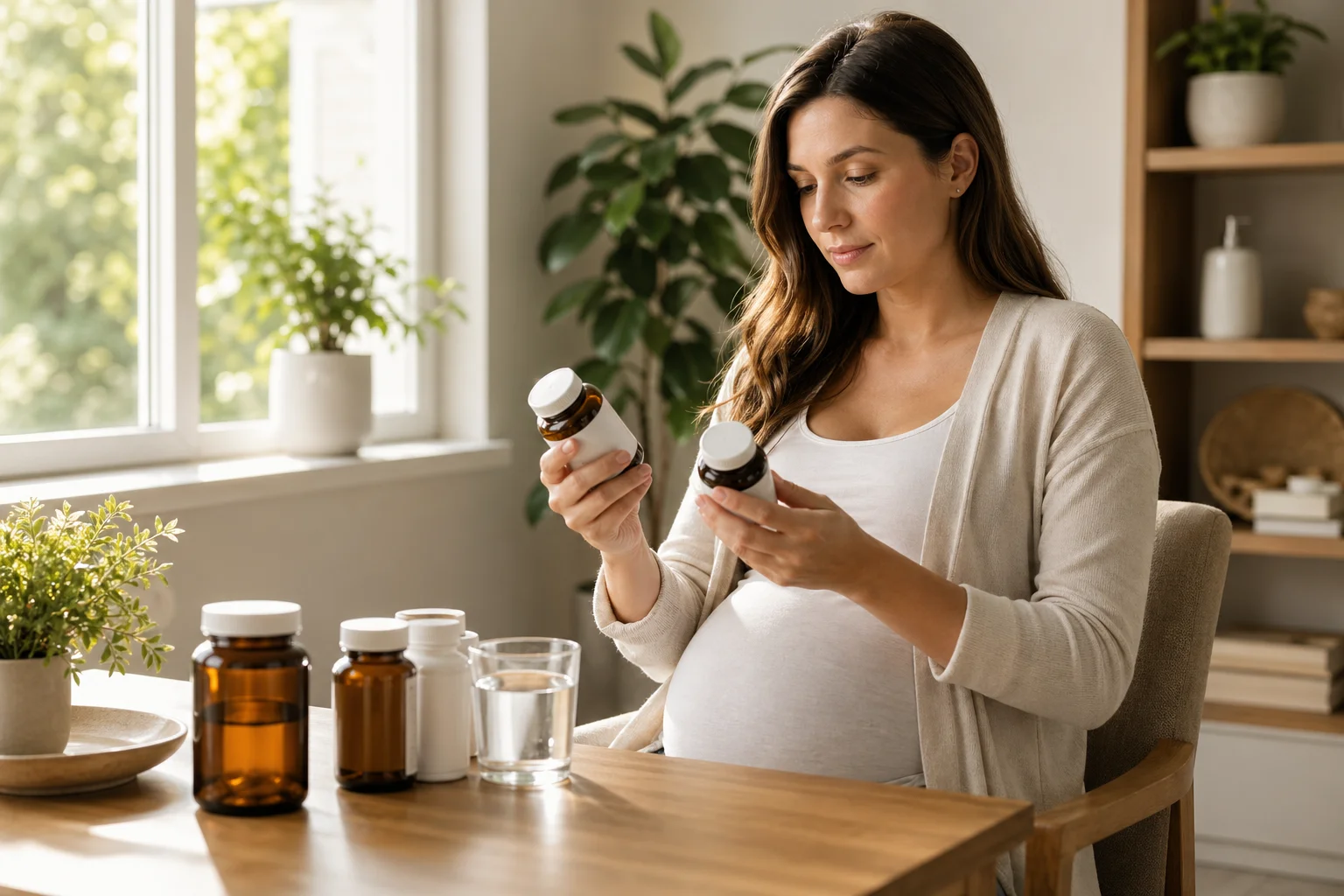
Large-scale human clinical trials confirming safety of supplemental astaxanthin doses during pregnancy do not currently exist. Most healthcare providers recommend that pregnant women consult their OB-GYN before taking any dietary supplement outside of a prescribed prenatal routine, including skin tanning supplements and beauty-focused health formulas.
The honest answer: insufficient data exists to confidently confirm safety, which is reason enough to pause skin tanning supplements and get professional clearance first.
Lycopene During Pregnancy: What You Need to Know
Lycopene has a more studied track record in pregnancy health contexts. Observational research, including studies published in the European Journal of Clinical Nutrition, has found that lycopene from dietary sources is a normal part of healthy pregnancy nutrition. Lycopene-rich foods like tomatoes and watermelon are routinely consumed during pregnancy without health concern.
Supplemental lycopene at concentrated doses is a distinct consideration. Absorption and metabolic processing can differ significantly from dietary lycopene intake. Without targeted clinical trials on supplemental lycopene doses specifically in pregnant women, the standard guidance from health professionals remains consistent: review all supplements with your provider before continuing use.
Why Beta Carotene Tanning Supplements Raise Bigger Concerns
This distinction matters significantly during pregnancy. Some older skin tanning supplements list beta carotene as the active ingredient. Beta carotene converts to vitamin A (retinol) in the body, and the American College of Obstetricians and Gynecologists (ACOG) identifies high-dose preformed vitamin A as one of the few supplements with documented teratogenic risk during pregnancy.
Beyond the pregnancy health concern, beta carotene also produces unnatural yellowish-orange tinting of the skin, a result that no quality skin tanning formula should deliver. The carotene-orange effect is both a cosmetic failure and a health flag during pregnancy. ChUV's formula contains no beta carotene. It relies on astaxanthin and lycopene, which produce a natural warm glow and a natural sun-kissed skin tone without any orange result.
If you see beta carotene listed as the primary active ingredient in any tanning gummy, both the safety profile and the glow quality are compromised.
The Standard Medical Guidance on Supplements During Pregnancy
ACOG and most OB-GYN practices follow a consistent standard: no dietary supplement should be started or continued during pregnancy without physician review. This applies to skin tanning gummies, beauty supplements, herbal formulas, and any vitamin or health supplement beyond the standard prenatal routine.
This is not a statement about any specific product's safety. It reflects the reality that metabolic processing, absorption rates, and safe dosing thresholds all shift during pregnancy, making case-by-case clinical review the responsible standard for all supplements including skin toning gummies daily.
Can You Still Achieve a Natural Tan While Pregnant?
Absolutely. A radiant glow and healthy skin tone during pregnancy are achievable without dietary supplements. Options that are generally considered safe include gradual sun exposure with proper SPF protection (following your provider's specific guidance), DHA-based topical self-tanning products applied to the skin surface rather than ingested, and bronzing cosmetics for immediate skin tone enhancement.
For those who built a natural tan using ChUV before pregnancy, the smart approach is to pause during pregnancy, consult your provider, and resume once cleared. The formula works on the same 4 to 8 weeks cycle whenever you restart. Taking gummies daily after your provider's green light will rebuild your natural warm glow and sun-kissed skin tone within a full cycle.
Frequently Asked Questions
Are tanning gummies safe to take while pregnant? Current research does not confirm that tanning supplement ingredients like astaxanthin are safe at concentrated supplemental doses during pregnancy. Human clinical trials establishing safety for pregnant women have not been conducted. Most healthcare providers recommend avoiding non-essential dietary supplements as a precaution. Consult your OB-GYN before taking any skin tanning gummies or skin tone supplements while pregnant.
Can astaxanthin harm a developing baby? Animal research shows astaxanthin crosses the placental barrier, but definitive human data on safe supplemental doses during pregnancy does not yet exist. This does not confirm astaxanthin is harmful. It means the evidence base is insufficient to confirm safety at supplement doses during pregnancy, which is why healthcare providers advise caution with all non-prenatal supplements.
Is lycopene safe for pregnant women? Lycopene from dietary sources, including tomatoes and red fruits, is considered safe and routinely consumed during pregnancy. Supplemental lycopene at concentrated doses has limited clinical evidence for pregnant women specifically. Review any supplement with your health provider before continuing use during pregnancy to ensure it fits your prenatal health plan.
Why is beta carotene more concerning than astaxanthin or lycopene during pregnancy? Beta carotene converts to vitamin A in the body, and high-dose preformed vitamin A is identified by ACOG as carrying teratogenic risk during pregnancy. This is a separate concern from beta carotene's well-documented cosmetic drawback: the unnatural yellowish-orange skin tinting it produces. ChUV uses no beta carotene, relying instead on astaxanthin and lycopene for a natural warm glow without any orange effect.
When can I start taking ChUV tanning gummies again after pregnancy? Once your healthcare provider clears you to resume non-prenatal supplements, and confirms it is safe if you are breastfeeding, ChUV can be restarted. Results return within 4 to 8 weeks of taking gummies daily again. Reach out anytime with product questions through the CAYO Nutra contact page.
The Right Time for ChUV
ChUV tanning gummies are built for adults ready to develop a natural warm glow with a clean, beta carotene-free formula. The dark reddish-purple sugar-coated cubes have a great taste, work within 4 to 8 weeks, and produce a natural sun-kissed skin tone and radiant glow that no beta carotene supplement can match in quality or safety. If you are currently pregnant, wait for your provider's clearance. When the time is right, explore the full ChUV tanning gummies formula and start building your natural tan.
The Timeline
Watch the glow build.
Scrub through eight weeks on ChUV. Pigment saturation, biology, and the moment the shift becomes visible, week by week.
Serum carotenoid levels rising. Antioxidant activity active.
The carotenoids load.
Astaxanthin and lycopene enter systemic circulation and begin to deposit in dermal tissue. You will not see the shift yet. The biology is running underneath.
11mg
Astaxanthin daily
5.5mg
Lycopene daily
7days
Consistent dosing
The shift goes visible.
Dermal saturation reaches the threshold where warmth reads in natural light. Face, chest, and forearms register first. Subtle, not staged. Sun-kissed, never painted.
62%
Carotenoid saturation
2-3tones
Visible warmth gained
28days
Consistent dosing
Full steady state.
Even distribution across skin tissue, a warm baseline that holds as long as you stay on the daily dose. This is the ChUV finish line and the starting point of the maintenance phase.
96%
Carotenoid saturation
1gummy
To hold the tone
56days
Consistent dosing
Built around the clinical-study window. The shift is gradual on purpose: the color reads natural because it builds like a real tan.
4.8/5 from 2,300+ reviews
What customers actually say.
Questions, answered
FAQ
How long before I see results?
Most people notice a warm tone by week 3-4, with full results at 8 weeks on one gummy daily.
Do tanning gummies work?
Yes. Carotenoid pigmentation is a well-documented pathway. ChUV uses astaxanthin and lycopene, both clinically studied for skin coloration.
Will ChUV turn me orange?
No. ChUV uses astaxanthin and lycopene at measured doses for a natural warm tone. Beta carotene is the ingredient that causes orange discoloration, and we refuse to use it.
Does ChUV replace sunscreen?
Astaxanthin offers real internal photoprotection by neutralizing UV-induced free radicals at the cellular level. For prolonged outdoor exposure, pair ChUV with topical SPF. Think of them as complementary.
What if I don't tan?
You don't need the sun to tan with ChUV. Carotenoid pigmentation deposits astaxanthin and lycopene directly into dermal tissue, producing a warm tone without UV. Sun exposure makes the effect richer. Astaxanthin and lycopene are photoprotective antioxidants, so pairing ChUV with moderate sun yields a deeper, more saturated tan than either alone.
Is ChUV safe to take daily?
Yes. ChUV is made in a GMP-certified facility in the USA, contains no artificial dyes, and is formulated at doses supported by clinical literature.
Can I take ChUV with other supplements?
Generally yes. Astaxanthin and lycopene are fat-soluble, so take ChUV with a meal that contains some healthy fat for best absorption.
How is ChUV different from other tanning supplements?
Most tanning gummies rely on beta carotene, which produces an unnatural orange cast at supplement doses. ChUV stacks clinically-studied astaxanthin and lycopene for a natural warm tone.
Does ChUV contain allergens?
ChUV is vegan, non-GMO, gluten-free, and free of the major allergens. See the full supplement facts panel on the product page.
How does shipping work?
Subscriptions ship free. One-time orders ship at standard domestic rates. Orders leave our fulfillment facility within 1 to 2 business days.
When should I expect to see results?
Most people see a first noticeable warmth in weeks 3-4 and full tone expression by week 6-8. Carotenoid pigmentation is cumulative, so consistent daily use matters more than dose stacking.
Do I need to keep taking ChUV to keep my color?
Yes. Carotenoid accumulation is gradual, and so is the fade. Daily use keeps your tone consistent.
Ready to start?
One gummy a day. Four weeks to visible warmth.
Join thousands already building their glow with ChUV. Subscribe and save 10%, skip or cancel anytime.