
Astaxanthin SPF Benefits: How ChUV Gummies Protect Your Skin

Astaxanthin is one of the most powerful natural antioxidants studied for skin photoprotection. Research shows it works from the inside out, neutralizing UV-induced free radicals before they damage skin cells.
How UV Radiation Damages Skin at the Cellular Level
When UV radiation reaches the skin, it triggers a cascade of biological damage. Free radicals are generated in skin cells, reactive oxygen species (ROS) that attack lipid membranes, proteins, and DNA. The result, at the molecular level, is oxidative stress: a state where the skin's antioxidant defenses are overwhelmed by the volume of reactive species.
This process is the root cause of UV-induced aging, inflammation, DNA mutation, and the breakdown of collagen and elastin over time. External sunscreen works by physically or chemically blocking UV photons before they penetrate skin. But radiation that reaches the deeper dermis, or diffuse UV exposure through cloud cover and daily ambient light, still generates oxidative stress that topical protection alone cannot fully address.
This is the gap that internal photoprotection addresses.
What the Research Says About Astaxanthin and UV Defense
The evidence for astaxanthin's photoprotective effects is substantive and growing. Key findings from peer-reviewed research:
Reduction in UV-induced skin damage: A double-blind, placebo-controlled clinical trial published in Acta Biochimica Polonica (2012) showed that astaxanthin supplements at 4mg daily significantly reduced UV-induced skin moisture loss and improved skin elasticity compared to placebo after 9 weeks of supplementation.
Free radical quenching: Research published in Marine Drugs (2018) confirmed astaxanthin's unique ability to neutralize singlet oxygen and other reactive oxygen species across both inner and outer cell membrane layers simultaneously. This membrane-spanning antioxidant mechanism is not shared by most other carotenoids or common antioxidants.
DNA protection at the cellular level: Studies reviewed in Nutrients (2020) examined astaxanthin's ability to reduce UV-induced DNA strand breaks in human skin fibroblasts. The results indicated meaningful protection against photodamage at the genetic level in cells exposed to UVA radiation.
Inflammatory pathway modulation: Astaxanthin suppresses NF-kB activation, a key inflammatory signaling pathway triggered by UV exposure. Research published in Experimental Dermatology (2009) demonstrated that astaxanthin reduced expression of matrix metalloproteinases (MMPs), the enzymes responsible for collagen degradation following UV stress.
How Internal Photoprotection Works: Astaxanthin provides internal antioxidant defense against UV-induced oxidative stress at the cellular level. While it supports your skin's natural resilience to UV exposure, topical sunscreen is still recommended for prolonged time outdoors. Internal and external photoprotection work best together.

Meet ChUV
The tanning gummy the article is about.
One daily gummy. Warm, natural tone in weeks. No UV, no beta carotene, no gimmicks.
- Clinical doses of astaxanthin + lycopene
- Visible warmth by week 3-4, peak at week 8
- Vegan, non-GMO, made in the USA
Astaxanthin SPF: What the Term Actually Means
The concept of astaxanthin SPF in scientific literature does not refer to a traditional sun protection factor in the way topical sunscreens are measured. Instead, it describes the compound's capacity to reduce UV-induced biological damage after photons have already reached skin tissue.
Some researchers refer to this as "internal photoprotection" or "nutritional photoprotection." Studies in this field estimate that certain carotenoids, including astaxanthin and lycopene, can contribute measurable protection equivalent to a very low SPF when taken consistently at clinical doses. This is supplementary protection, not a replacement for topical SPF.
Research by Sies and Stahl, published in American Journal of Clinical Nutrition (2004), established the foundation for dietary carotenoids as contributors to skin photoprotection. Subsequent studies specifically on astaxanthin have expanded this understanding considerably.
How Astaxanthin's Structure Enables Superior Antioxidant Action
The reason natural astaxanthin performs so well as an antioxidant comes down to molecular structure. Astaxanthin derived from Haematococcus pluvialis algae has a unique geometry that allows it to position across the entire phospholipid bilayer of a cell membrane, with polar end groups extending into both the aqueous interior and exterior of the cell.
This means astaxanthin can:
What Astaxanthin Does Internally
Protects:
- Outer cell membrane layer from exterior oxidative attack
- Inner cell membrane layer from interior reactive oxygen species
- Lipid structures within the membrane from peroxidation
- Mitochondria from UV-triggered oxidative damage
- Nuclear DNA from free radical strand breaks
Unlike most antioxidants, which work only in lipid-soluble or water-soluble environments:
- Cannot span entire cell membrane
- Limited to one oxidative environment
- Less comprehensive protection
This structural advantage is why astaxanthin's antioxidant capacity in lab measurements is dramatically higher than most other known antioxidants, including other carotenoids like beta-carotene and lutein.
Sun Protection Benefits Beyond Tanning
ChUV is positioned as a tanning supplement, but the health benefits of astaxanthin's UV protective properties extend well beyond cosmetic results. Regular supplementation supports:
Reduction in photoaging markers: Among the most notable benefits astaxanthin delivers is protection against photoaging. Consistent antioxidant protection against UV-induced collagen degradation contributes to longer-term skin resilience and reduced visible aging. Cosmetic Dermatology (2012) published clinical data showing improvements in skin texture and reduction in UV-induced crow's feet after sustained astaxanthin supplementation.
Improved skin moisture retention post-UV: UV radiation disrupts the skin barrier and accelerates transepidermal water loss (TEWL). Astaxanthin supplementation has been shown to reduce this effect, supporting better hydration maintenance in sun-exposed skin.
Reduced UV-induced inflammation: The anti-inflammatory properties of astaxanthin reduce the redness and discomfort associated with moderate UV exposure, supporting faster skin recovery.
Support for healthy tanning response: A skin that is less oxidatively stressed and better protected at the cellular level responds to UV exposure more effectively. The tanning process, melanin synthesis triggered by UV exposure, occurs within skin cells that are healthier when oxidative burden is lower.
Combining Internal and External Protection: The Complete Approach
The most effective photoprotection strategy combines topical and internal approaches. External sunscreen physically or chemically blocks UV photons. Astaxanthin supplements address the oxidative damage from radiation that does penetrate, from ambient UVA, from gaps in topical coverage, from UV encountered during daily life rather than deliberate sun exposure.
| Protection Type | Mechanism | Coverage | Role |
|---|---|---|---|
| Topical SPF sunscreen | Blocks/absorbs UV photons at skin surface | External UV barrier | Primary UV block for outdoor exposure |
| Astaxanthin (internal) | Neutralizes free radicals from UV that reaches cells | Internal oxidative defense | Supports cells against UV damage already absorbed |
| Lycopene (internal) | Additional carotenoid antioxidant; some photoprotective data | Complementary internal support | Works synergistically with astaxanthin |
| Combined approach | Both external blocking and internal defense | Most comprehensive | Optimal for skin health, tanning, and anti-aging |
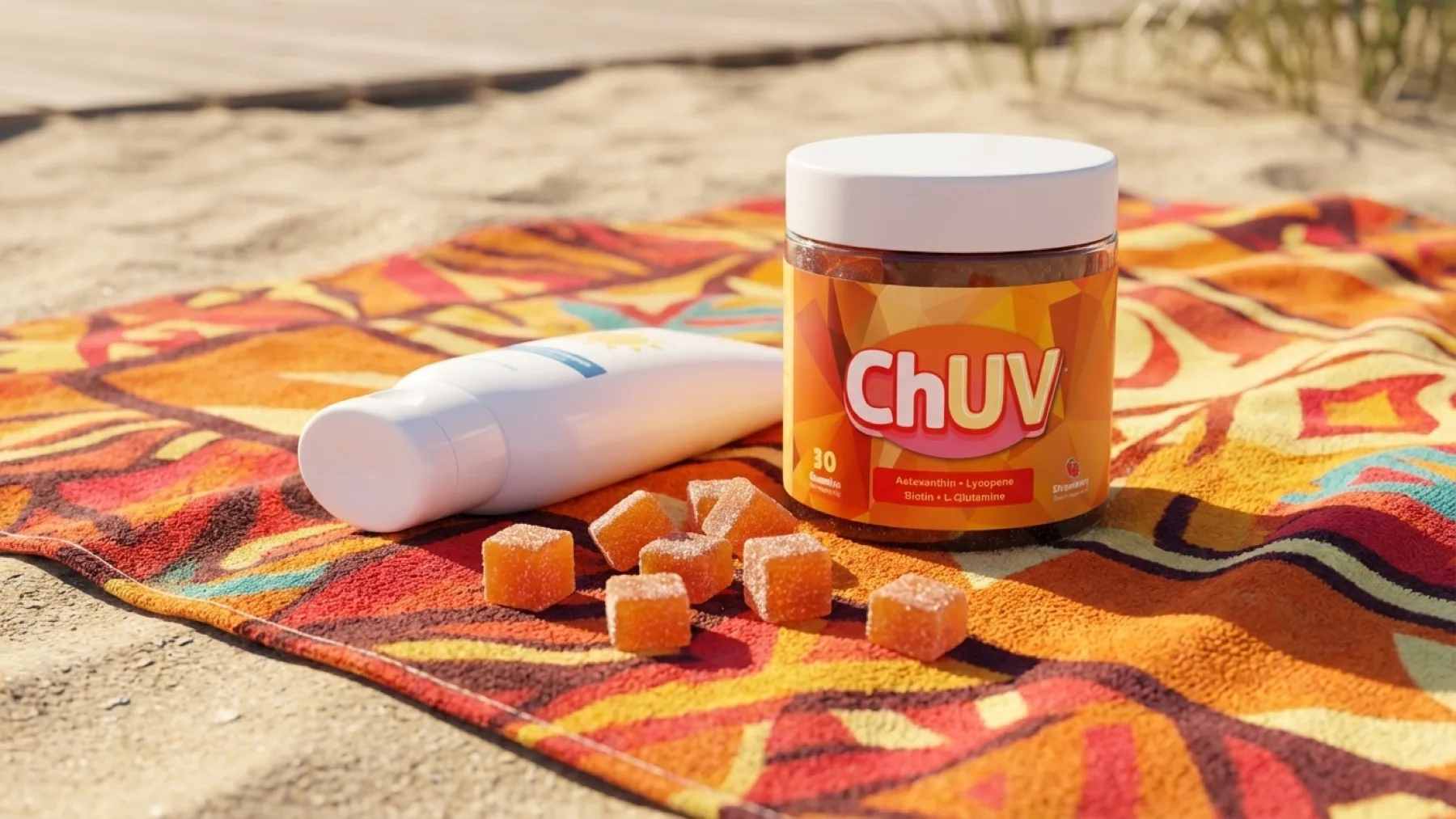
ChUV combines astaxanthin and lycopene in a formulation designed for daily supplementation. One gummy per day, taken consistently, builds the carotenoid concentration in skin tissue that supports both a gradual natural tan and meaningful internal photoprotection over time. Results develop over 4-8 weeks of consistent use, as carotenoids accumulate in subcutaneous tissue.
For more on how ChUV works and what to expect from the timeline, see our guide on how long tanning gummies take to work. For side effect information and safety context, our tanning gummies side effects guide covers what to expect.
Frequently Asked Questions
Does astaxanthin replace sunscreen?
Astaxanthin provides meaningful internal photoprotection by neutralizing UV-induced oxidative damage at the cellular level. It supports your skin's defense from the inside out. For prolonged outdoor exposure, pairing it with topical sunscreen gives you the most comprehensive protection.
How much astaxanthin is needed for photoprotective effects?
Clinical studies showing photoprotective benefits typically use doses of 4-6mg daily. ChUV's formulation is built around clinically relevant dosing within a single daily gummy, taken consistently over time.
Can astaxanthin supplements reduce sunburn?
Research suggests astaxanthin can reduce UV-induced inflammation and oxidative damage that contributes to sunburn severity, but it is not a sunburn prevention tool on its own. Do not rely on any supplement to prevent sunburn during intense UV exposure.
How long does it take for astaxanthin to provide UV protective benefits?
Like its tanning effects, the photoprotective benefits of astaxanthin require consistent supplementation to build adequate tissue concentrations. Studies typically observe significant effects after 4-9 weeks of daily supplementation.
What makes astaxanthin better than other carotenoids for UV protection?
Astaxanthin's unique membrane-spanning molecular structure allows it to neutralize free radicals in both lipid and aqueous cellular environments simultaneously. Most other carotenoids can only protect in one environment. This dual-environment action gives astaxanthin superior protective capacity against UV-induced oxidative damage.
Skin Health That Goes Deeper Than Color
The story of ChUV is not just about a natural glow. It is about giving your skin a biochemical advantage against the UV exposure it faces every day. Astaxanthin from Haematococcus pluvialis algae, one of the most powerful antioxidant compounds in the natural world, supports healthy cells, reduces oxidative damage, and helps your skin look and function at its best.
One gummy per day. Built on science. Designed for people who want results that are real, safe, and worth the wait.
Shop ChUV Tanning Gummies and experience what astaxanthin can do for your skin. Questions about fit, dosing, or the science? Reach out to the CAYO Nutra team anytime.
The Timeline
Watch the glow build.
Scrub through eight weeks on ChUV. Pigment saturation, biology, and the moment the shift becomes visible, week by week.
Serum carotenoid levels rising. Antioxidant activity active.
The carotenoids load.
Astaxanthin and lycopene enter systemic circulation and begin to deposit in dermal tissue. You will not see the shift yet. The biology is running underneath.
11mg
Astaxanthin daily
5.5mg
Lycopene daily
7days
Consistent dosing
The shift goes visible.
Dermal saturation reaches the threshold where warmth reads in natural light. Face, chest, and forearms register first. Subtle, not staged. Sun-kissed, never painted.
62%
Carotenoid saturation
2-3tones
Visible warmth gained
28days
Consistent dosing
Full steady state.
Even distribution across skin tissue, a warm baseline that holds as long as you stay on the daily dose. This is the ChUV finish line and the starting point of the maintenance phase.
96%
Carotenoid saturation
1gummy
To hold the tone
56days
Consistent dosing
Built around the clinical-study window. The shift is gradual on purpose: the color reads natural because it builds like a real tan.
4.8/5 from 2,300+ reviews
What customers actually say.
Questions, answered
FAQ
How long before I see results?
Most people notice a warm tone by week 3-4, with full results at 8 weeks on one gummy daily.
Do tanning gummies work?
Yes. Carotenoid pigmentation is a well-documented pathway. ChUV uses astaxanthin and lycopene, both clinically studied for skin coloration.
Will ChUV turn me orange?
No. ChUV uses astaxanthin and lycopene at measured doses for a natural warm tone. Beta carotene is the ingredient that causes orange discoloration, and we refuse to use it.
Does ChUV replace sunscreen?
Astaxanthin offers real internal photoprotection by neutralizing UV-induced free radicals at the cellular level. For prolonged outdoor exposure, pair ChUV with topical SPF. Think of them as complementary.
What if I don't tan?
You don't need the sun to tan with ChUV. Carotenoid pigmentation deposits astaxanthin and lycopene directly into dermal tissue, producing a warm tone without UV. Sun exposure makes the effect richer. Astaxanthin and lycopene are photoprotective antioxidants, so pairing ChUV with moderate sun yields a deeper, more saturated tan than either alone.
Is ChUV safe to take daily?
Yes. ChUV is made in a GMP-certified facility in the USA, contains no artificial dyes, and is formulated at doses supported by clinical literature.
Can I take ChUV with other supplements?
Generally yes. Astaxanthin and lycopene are fat-soluble, so take ChUV with a meal that contains some healthy fat for best absorption.
How is ChUV different from other tanning supplements?
Most tanning gummies rely on beta carotene, which produces an unnatural orange cast at supplement doses. ChUV stacks clinically-studied astaxanthin and lycopene for a natural warm tone.
Does ChUV contain allergens?
ChUV is vegan, non-GMO, gluten-free, and free of the major allergens. See the full supplement facts panel on the product page.
How does shipping work?
Subscriptions ship free. One-time orders ship at standard domestic rates. Orders leave our fulfillment facility within 1 to 2 business days.
When should I expect to see results?
Most people see a first noticeable warmth in weeks 3-4 and full tone expression by week 6-8. Carotenoid pigmentation is cumulative, so consistent daily use matters more than dose stacking.
Do I need to keep taking ChUV to keep my color?
Yes. Carotenoid accumulation is gradual, and so is the fade. Daily use keeps your tone consistent.
Ready to start?
One gummy a day. Four weeks to visible warmth.
Join thousands already building their glow with ChUV. Subscribe and save 10%, skip or cancel anytime.