
Astaxanthin Bioavailability: Fat-Soluble Secrets Most People Miss

Astaxanthin is fat-soluble, which means your body can only absorb it effectively when dietary fat is present. Skip the fat, and bioavailability drops sharply. Understanding this one principle is the difference between getting real results from an astaxanthin supplement and losing most of the dose before it reaches your bloodstream.
Why Astaxanthin Belongs to the Fat-Soluble Carotenoid Family
Astaxanthin is a carotenoid, part of the same biological family as lycopene and lutein. What these compounds share is a long carbon chain structure that is lipophilic, meaning it bonds with fats and oils rather than water. This structural property governs everything about how your body processes astaxanthin at the cell level.
Because astaxanthin is fat-soluble, it travels through the body packaged inside lipid particles. It is absorbed in the small intestine alongside dietary fats, incorporated into chylomicrons, and distributed through lymphatic and circulatory systems to reach target tissues. Without fat present during digestion, this entire pathway is compromised.
Compared to water-soluble antioxidants like vitamin C, fat-soluble antioxidants like astaxanthin accumulate in cell membranes. This is one reason astaxanthin is studied for its stability in protecting cells from oxidative stress, and why natural astaxanthin sourced from Haematococcus pluvialis has become the standard in nutritional sciences research.
The Science of Oral Bioavailability
Oral bioavailability refers to the fraction of an oral dose that reaches systemic circulation in an active form. For astaxanthin, oral bioavailability is variable and highly dependent on formulation and food co-administration.
Østerlie, Bjerkeng, and Liaaen-Jensen published findings in the Journal of Nutritional Biochemistry (2000) tracking plasma appearance of astaxanthin after a single oral dose. Their work confirmed that astaxanthin appears in plasma lipoproteins consistent with fat-soluble carotenoid absorption through the lymphatic route, and that absorption followed the pattern tied to fat digestion and chylomicron packaging.
Fassett and Coombes, writing in Marine Drugs (2011), noted that astaxanthin bioavailability is enhanced when administered with a lipid-rich meal. Their review highlighted that astaxanthin in oil-based preparations showed improved plasma concentrations compared to dry powder forms taken without fat. The data across these studies is consistent: food context shapes how much astaxanthin your body can actually use.

Meet ChUV
The tanning gummy the article is about.
One daily gummy. Warm, natural tone in weeks. No UV, no beta carotene, no gimmicks.
- Clinical doses of astaxanthin + lycopene
- Visible warmth by week 3-4, peak at week 8
- Vegan, non-GMO, made in the USA
How Dietary Fat Enhances Absorption Step by Step
When dietary fat enters the digestive system, the body releases bile salts from the gallbladder. These bile salts emulsify fats into smaller droplets, enabling digestive enzymes to break them down efficiently. Fat-soluble compounds like astaxanthin get incorporated into structures called mixed micelles during this process, which are then absorbed by intestinal cells and packaged for transport.
Without fat in the gut, bile release is minimal, micelle formation is limited, and a fat-soluble carotenoid like astaxanthin passes through with substantially reduced absorption.
Oil-based delivery forms take advantage of this mechanism. When natural astaxanthin is suspended in oil rather than compressed into dry powder, it is already partially solubilized, giving it a structural head start in the absorption process. Hussein et al. in the Journal of Natural Products (2006) noted that the biological activity and health benefits of astaxanthin are closely tied to how efficiently it is absorbed and transported to tissues.
Haematococcus Pluvialis: Why the Source Affects Bioavailability
Not all astaxanthin is the same. Natural astaxanthin extracted from Haematococcus pluvialis microalgae is predominantly in the 3S,3'S stereoisomer form, esterified with fatty acids. This esterified form undergoes hydrolysis in the gut to release free astaxanthin for absorption, a process that occurs naturally alongside fat digestion.
Synthetic astaxanthin, by contrast, is a racemic mixture of stereoisomers in free form. Research in nutritional sciences has explored the biological differences between these forms. Coral-Hinostroza et al. in Comparative Biochemistry and Physiology (2004) examined plasma appearance of astaxanthin isomers after oral administration and found differences tied to the stereoisomer form delivered.
The extraction process matters too. Haematococcus pluvialis is the richest natural astaxanthin source known, and the astaxanthin it produces carries a complete carotenoid profile alongside it. ChUV tanning gummies use natural astaxanthin from Haematococcus pluvialis, the most studied natural extraction source available for oral supplementation.
Powder vs. Oil Delivery: What the Research Suggests
Astaxanthin supplements come in several delivery forms: dry powder capsules, oil-based softgels, and gummies. The distinction has real implications for oral bioavailability.
Dry powder astaxanthin taken without a fat-containing meal leaves a meaningful portion unabsorbed. Oil-suspended forms, particularly softgels using fish oil or sunflower oil as the carrier, create a more bioavailable environment from the start. Studies comparing delivery formats of fat-soluble carotenoids have consistently noted that lipid-based forms produce enhanced plasma concentrations compared to powder forms in fasted conditions.
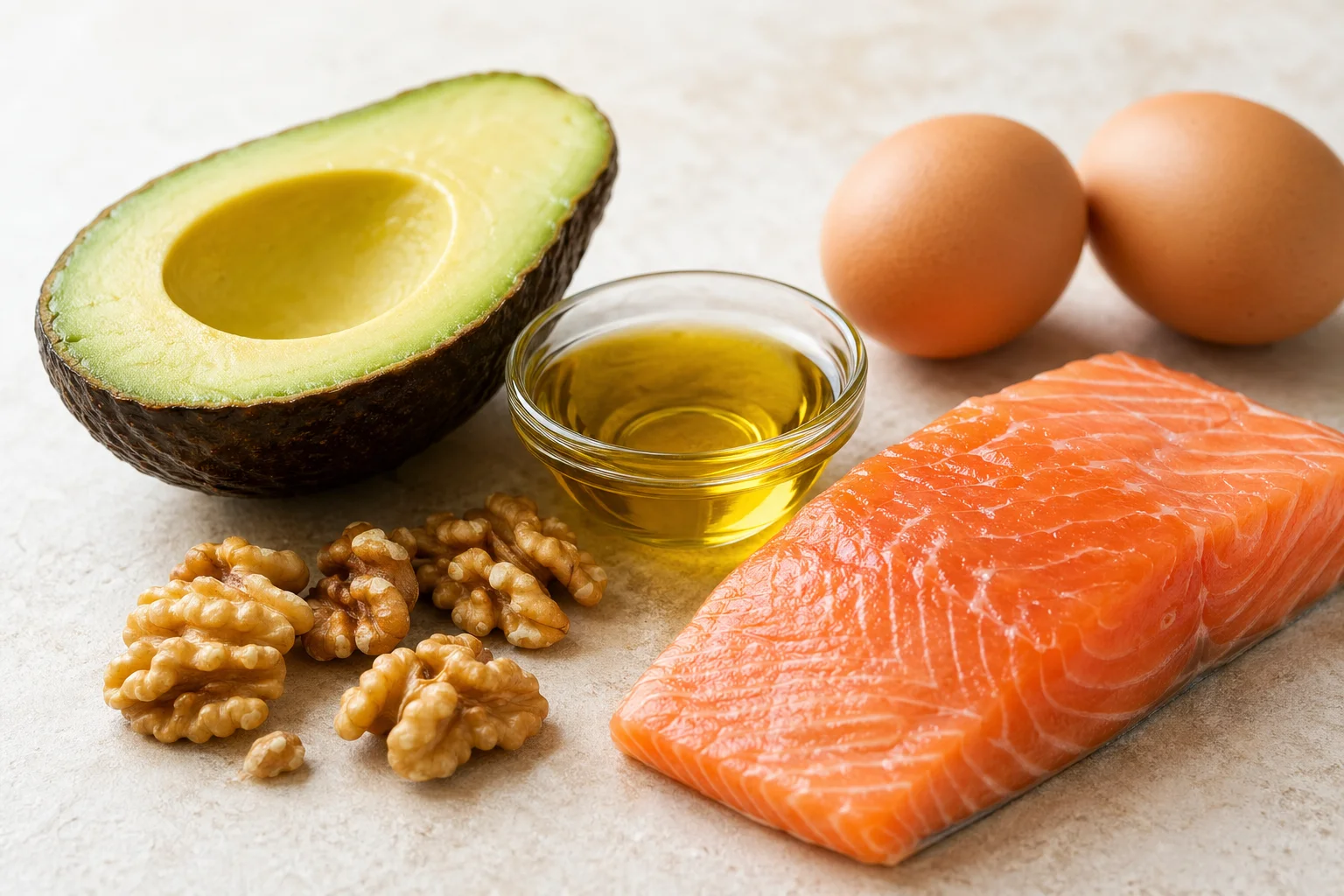
Gummies sit in a practical middle ground. Taking them alongside a meal that includes healthy fats, such as avocado, eggs, olive oil, or salmon, provides the dietary lipid context that supports full absorption of both astaxanthin and the lycopene it is paired with.
Practical Steps to Maximize Your Astaxanthin Absorption
The research points toward a straightforward strategy for getting the most from oral astaxanthin supplementation.
Take it with a meal. A meal with meaningful dietary fat is significantly better than a light snack or fasted state. Even a tablespoon of olive oil on a salad makes a difference.
Choose natural astaxanthin. Products using Haematococcus pluvialis extraction provide the stereoisomer profile with the most research supporting its health benefits in humans.
Be consistent. Carotenoids accumulate in tissues gradually. Studies measuring antioxidant and skin outcomes from astaxanthin oral administration typically observe changes at four to eight weeks of daily use, not days. Consistency matters more than timing within a single day.
Pair with other fat-soluble carotenoids when possible. Lycopene is also a fat-soluble carotenoid, and combining carotenoids with dietary fat in the same meal supports absorption across the whole carotenoid category.
If you have questions about how to integrate ChUV into your daily routine, the CAYO Nutra team is ready to help.
Frequently Asked Questions
Does astaxanthin need to be taken with fat to work?
Yes. Astaxanthin is a fat-soluble carotenoid, and its oral bioavailability depends on dietary fat being present during digestion. Fat triggers bile release and micelle formation, which are the biological mechanisms your body uses to absorb lipophilic compounds. Without fat, absorption is significantly reduced and most of the astaxanthin passes through the digestive system without entering circulation.
What foods pair best with astaxanthin supplements?
Foods with healthy fats support absorption of fat-soluble carotenoids like astaxanthin. Good options include avocado, eggs, salmon, olive oil, nuts, and full-fat dairy. Even a small serving of one of these foods alongside your supplement provides meaningful support for absorption compared to taking it on an empty stomach or with only carbohydrates.
What is the difference between natural and synthetic astaxanthin?
Natural astaxanthin from Haematococcus pluvialis is predominantly the 3S,3'S stereoisomer in esterified form, which is how it occurs in nature. Synthetic astaxanthin is a racemic mixture of stereoisomers in free form. Human supplementation research has been conducted primarily with natural astaxanthin, and the two forms have different biological profiles after oral administration.
How long does it take for astaxanthin to show results?
Studies on astaxanthin oral supplementation for skin and antioxidant outcomes typically measure changes at four to eight weeks of daily administration. This reflects gradual carotenoid accumulation in tissues over time. Taking your supplement consistently each day, with a fat-containing meal, gives the process the best possible foundation.
Can astaxanthin from food sources match what a supplement provides?
Dietary astaxanthin from food sources like salmon and shrimp is naturally embedded in a fat-rich matrix, which supports absorption. However, the concentration of astaxanthin in food is far lower than in a targeted supplement. For consistent daily doses at the concentrations studied in health research, an oral supplement provides a more reliable source than diet alone.
Start Getting the Most From Every Gummy
Astaxanthin bioavailability is not fixed. How and when you take it shapes how much your body actually absorbs. Pair your daily ChUV gummy with a fat-containing meal, choose a natural Haematococcus pluvialis source, and stay consistent for four to eight weeks. ChUV tanning gummies combine astaxanthin and lycopene in a daily format designed to work with your body's absorption biology, not against it.
The Timeline
Watch the glow build.
Scrub through eight weeks on ChUV. Pigment saturation, biology, and the moment the shift becomes visible, week by week.
Serum carotenoid levels rising. Antioxidant activity active.
The carotenoids load.
Astaxanthin and lycopene enter systemic circulation and begin to deposit in dermal tissue. You will not see the shift yet. The biology is running underneath.
11mg
Astaxanthin daily
5.5mg
Lycopene daily
7days
Consistent dosing
The shift goes visible.
Dermal saturation reaches the threshold where warmth reads in natural light. Face, chest, and forearms register first. Subtle, not staged. Sun-kissed, never painted.
62%
Carotenoid saturation
2-3tones
Visible warmth gained
28days
Consistent dosing
Full steady state.
Even distribution across skin tissue, a warm baseline that holds as long as you stay on the daily dose. This is the ChUV finish line and the starting point of the maintenance phase.
96%
Carotenoid saturation
1gummy
To hold the tone
56days
Consistent dosing
Built around the clinical-study window. The shift is gradual on purpose: the color reads natural because it builds like a real tan.
4.8/5 from 2,300+ reviews
What customers actually say.
Questions, answered
FAQ
How long before I see results?
Most people notice a warm tone by week 3-4, with full results at 8 weeks on one gummy daily.
Do tanning gummies work?
Yes. Carotenoid pigmentation is a well-documented pathway. ChUV uses astaxanthin and lycopene, both clinically studied for skin coloration.
Will ChUV turn me orange?
No. ChUV uses astaxanthin and lycopene at measured doses for a natural warm tone. Beta carotene is the ingredient that causes orange discoloration, and we refuse to use it.
Does ChUV replace sunscreen?
Astaxanthin offers real internal photoprotection by neutralizing UV-induced free radicals at the cellular level. For prolonged outdoor exposure, pair ChUV with topical SPF. Think of them as complementary.
What if I don't tan?
You don't need the sun to tan with ChUV. Carotenoid pigmentation deposits astaxanthin and lycopene directly into dermal tissue, producing a warm tone without UV. Sun exposure makes the effect richer. Astaxanthin and lycopene are photoprotective antioxidants, so pairing ChUV with moderate sun yields a deeper, more saturated tan than either alone.
Is ChUV safe to take daily?
Yes. ChUV is made in a GMP-certified facility in the USA, contains no artificial dyes, and is formulated at doses supported by clinical literature.
Can I take ChUV with other supplements?
Generally yes. Astaxanthin and lycopene are fat-soluble, so take ChUV with a meal that contains some healthy fat for best absorption.
How is ChUV different from other tanning supplements?
Most tanning gummies rely on beta carotene, which produces an unnatural orange cast at supplement doses. ChUV stacks clinically-studied astaxanthin and lycopene for a natural warm tone.
Does ChUV contain allergens?
ChUV is vegan, non-GMO, gluten-free, and free of the major allergens. See the full supplement facts panel on the product page.
How does shipping work?
Subscriptions ship free. One-time orders ship at standard domestic rates. Orders leave our fulfillment facility within 1 to 2 business days.
When should I expect to see results?
Most people see a first noticeable warmth in weeks 3-4 and full tone expression by week 6-8. Carotenoid pigmentation is cumulative, so consistent daily use matters more than dose stacking.
Do I need to keep taking ChUV to keep my color?
Yes. Carotenoid accumulation is gradual, and so is the fade. Daily use keeps your tone consistent.
Ready to start?
One gummy a day. Four weeks to visible warmth.
Join thousands already building their glow with ChUV. Subscribe and save 10%, skip or cancel anytime.