
Are Tanning Gummies FDA Approved? What You Need to Know

Tanning gummies are not FDA approved, and neither is any other dietary supplement in the United States. That is not a red flag; it is how the regulatory system works. Understanding the actual framework governing tanning supplements, and what separates compliant products from unsafe ones, tells you far more about a product's safety than a simple "approved" label would.
How the FDA Actually Regulates Dietary Supplements
The FDA operates under the Dietary Supplement Health and Education Act (DSHEA) of 1994 when it comes to dietary supplements. Under this framework, supplements do not require pre-market approval the way pharmaceutical drugs do. This is a common source of confusion for consumers.
Here is what DSHEA actually requires:
Step 1: Manufacturer Responsibility Supplement manufacturers are responsible for ensuring their products are safe and that any claims made are truthful and not misleading. They do not submit products for FDA approval before selling.
Step 2: FDA Oversight Authority The FDA retains authority to take action against supplements that are unsafe or misbranded after they reach market. This includes recalls, warning letters, and enforcement actions.
Step 3: GMP Compliance Manufacturers must follow Good Manufacturing Practices (GMPs), which govern facility cleanliness, quality control testing, ingredient identity verification, and label accuracy.
Step 4: New Dietary Ingredient Notifications For ingredients not marketed before 1994, manufacturers must submit a New Dietary Ingredient (NDI) notification to the FDA at least 75 days before marketing, providing safety data.
This structure means that the FDA's role with supplements is more regulatory than approvals-based. The agency monitors for problems, investigates complaints, and acts on unsafe products rather than reviewing each product before it goes to market.
What GRAS Status Actually Means for Ingredients
When evaluating whether a supplement ingredient is genuinely safe and recognized as such, GRAS status is the key designation to look for. "Generally Recognized as Safe" is an FDA classification given to substances with either a long history of safe use in food or a strong scientific consensus supporting safety at intended levels of use.
GRAS is not self-declared in a vacuum. For novel ingredients, GRAS determinations rely on scientific literature, expert panels, and in many cases formal FDA review. When an ingredient carries legitimate GRAS status, it reflects a real body of evidence supporting its safety.
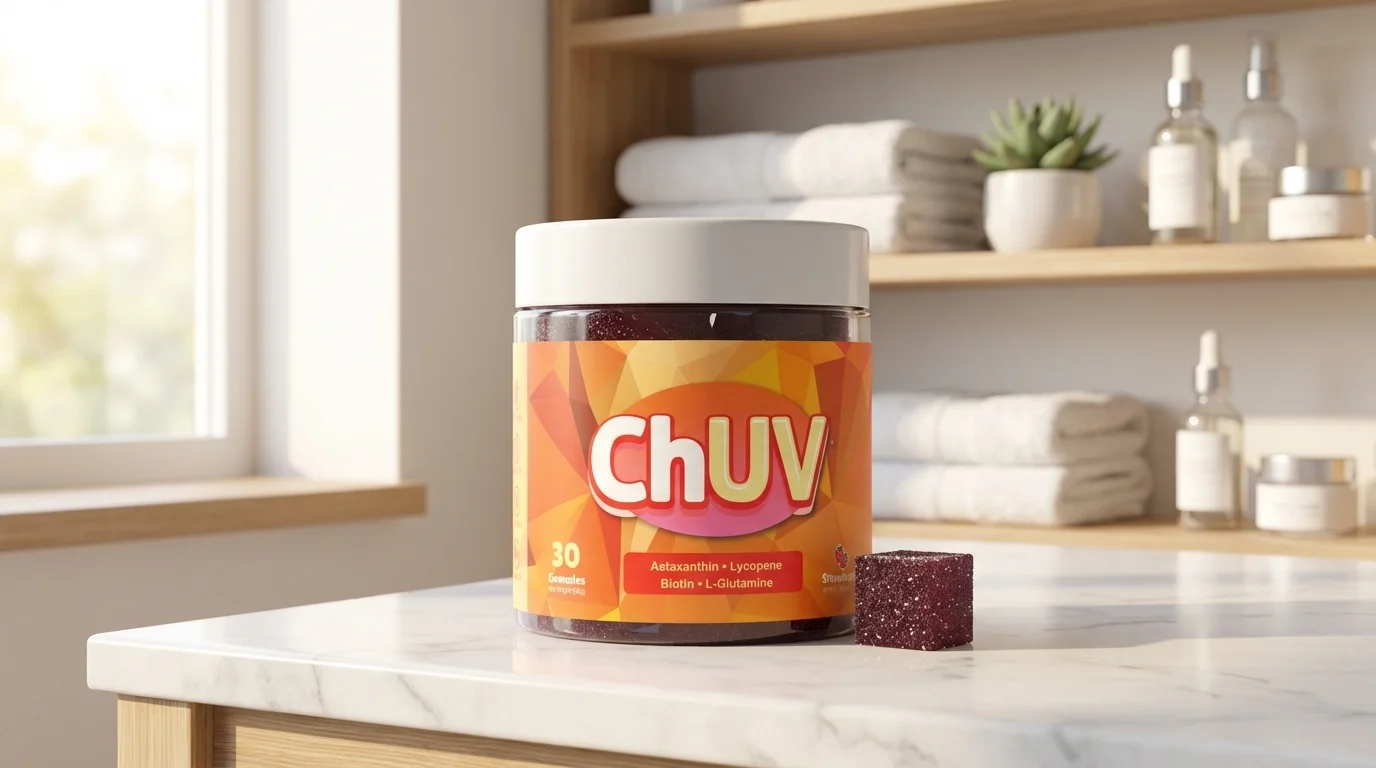
Both astaxanthin (from Haematococcus pluvialis algae) and lycopene, the two primary carotenoid ingredients in ChUV, carry GRAS status. This is meaningful regulatory recognition that the ingredients used in ChUV have established safety credentials under the same framework the FDA applies across food and dietary ingredient safety.
Key distinction: The absence of "FDA approved" on a supplement label is not a warning sign. It reflects the legal framework under which all dietary supplements operate in the U.S. What matters is whether the ingredients are GRAS-classified, whether the manufacturer follows GMPs, and whether any health claims made are substantiated and truthful.

Meet ChUV
The tanning gummy the article is about.
One daily gummy. Warm, natural tone in weeks. No UV, no beta carotene, no gimmicks.
- Clinical doses of astaxanthin + lycopene
- Visible warmth by week 3-4, peak at week 8
- Vegan, non-GMO, made in the USA
How Tanning Gummy Regulation Differs from Drug Approval
Pharmaceutical drugs undergo clinical trials and FDA review before they can be sold. Dietary supplements do not follow this path, and they are not supposed to. The regulatory lines are drawn around intended use and the nature of the product.
Supplements make structure/function claims about supporting normal body processes. They cannot claim to treat, cure, diagnose, or prevent disease. A tanning supplement can legitimately describe how its ingredients support skin pigmentation or provide antioxidant benefits. It cannot claim to treat a medical condition.
This distinction matters when evaluating tanning gummies specifically. Products in this category are dietary supplements, not drugs, and they are regulated accordingly. The question for consumers is not whether they have drug-style FDA approval but whether they use ingredients with established safety profiles and whether the manufacturer operates transparently under DSHEA.
Where the FDA Does Draw a Hard Line: Canthaxanthin
While the FDA does not pre-approve supplements, it absolutely has the authority to ban or restrict specific ingredients based on safety evidence. Beta-carotene at very high doses has been associated with increased lung cancer risk in smokers in clinical trials, which is why responsible supplement formulations avoid high-dose beta-carotene in certain populations.
More directly relevant to the tanning supplement category: canthaxanthin was widely used in tanning pills during the 1980s and 1990s. The FDA took action against canthaxanthin-based tanning products because the compound causes retinal crystal deposits at tanning-relevant doses, a condition called gold dust retinopathy. The FDA's position is that canthaxanthin is not approved as a tanning agent and that products marketed for that purpose are illegal.
This is an example of the regulatory system working as designed: an ingredient with documented health risks at used doses was flagged and restricted.
ChUV does not use canthaxanthin. ChUV does not use high-dose beta-carotene. The formulation is built around ingredients that are GRAS-classified, well-tolerated at supplement doses, and supported by substantial published research.
What to Look for in a Regulated, Transparent Supplement
Given the DSHEA framework, consumers need to know what signals indicate a responsibly formulated supplement versus one that cuts regulatory corners.
| Signal | Good Sign | Red Flag |
|---|---|---|
| Ingredient transparency | Full ingredient list with sources disclosed | Proprietary blends hiding ingredient quantities |
| GRAS status | Primary active ingredients have GRAS classification | Novel or experimental compounds without safety data |
| Claims | Structure/function claims with proper disclaimers | Disease treatment claims, miracle result language |
| GMP compliance | Manufactured in GMP-certified facility | No manufacturing quality certifications mentioned |
| Third-party testing | Independent verification of label accuracy | No mention of quality testing |
| Restricted ingredients | No canthaxanthin, no excessive beta-carotene | Contains ingredients with FDA warnings or restrictions |
ChUV tanning gummies are formulated to check each of these boxes. The ingredients are disclosed fully, the active carotenoids carry GRAS status, and no claims are made that exceed what the science supports.
How FDA Monitoring Actually Protects Consumers
Even without pre-market approval, the FDA's post-market surveillance system provides real consumer protection. The FDA receives and investigates adverse event reports for supplements, conducts facility inspections, issues warning letters for non-compliant products, and coordinates recalls when safety issues emerge.
This system has resulted in enforcement actions across the supplement industry when companies misrepresent their products, use banned ingredients, or fail GMP requirements. For consumers, checking that a supplement brand has no active FDA warning letters or enforcement actions against it is a practical due diligence step.
Supplement Regulation Is Not a Free-for-All
A common misconception is that the supplement industry is entirely unregulated. In practice, DSHEA creates a framework with real enforcement teeth, GRAS classifications create meaningful ingredient safety benchmarks, and the FDA's ongoing oversight authority keeps manufacturers accountable. The difference from pharmaceuticals is not that supplements are unregulated but that they are regulated differently, with the burden on manufacturer safety assurance rather than pre-market FDA review.
For a supplement like ChUV, where the active ingredients are natural, well-studied carotenoids with established safety records, the DSHEA framework is entirely appropriate. The product is not a drug; it is a natural dietary supplement designed to support healthy skin function and a gradual, even skin tone over 4-8 weeks of consistent use.
For more on the specific ingredients and how they work, read our full ingredient science breakdown and our comparison of astaxanthin vs. canthaxanthin.
Frequently Asked Questions
Are tanning gummies legal to sell in the United States?
Yes. Tanning gummies formulated as dietary supplements using GRAS-classified ingredients are legal to sell under DSHEA. Products using ingredients not approved or recognized as safe for their intended use, such as canthaxanthin in tanning products, are not legal for that marketed purpose.
Does the FDA test supplements before they go on sale?
No. Under DSHEA, the FDA does not conduct pre-market testing or approval of dietary supplements. Manufacturers are responsible for ensuring safety and label accuracy. The FDA monitors the market and takes action on products that violate safety or labeling requirements.
Is astaxanthin FDA approved?
Astaxanthin from Haematococcus pluvialis carries GRAS status for use in dietary supplements. GRAS is the relevant FDA designation for supplement ingredients; drug-style approval does not apply to dietary supplement ingredients.
What makes ChUV different from unregulated tanning supplements?
ChUV uses ingredients with established GRAS status (astaxanthin and lycopene), makes no unsupported medical claims, and avoids ingredients with known safety concerns like canthaxanthin and high-dose beta-carotene. This positions the product squarely within compliant, responsible supplementation.
Should I consult a doctor before taking tanning gummies?
Consulting a healthcare provider before starting any new supplement is always a reasonable step, particularly for individuals who are pregnant, nursing, or taking medications. For generally healthy adults, ChUV's ingredient profile is well-tolerated and supported by substantial safety data. Reviews of ChUV consistently reflect this tolerability. Users who want the most effective results should focus on daily consistency over 4-8 weeks, which is considered best practice for carotenoid supplementation.
Transparency Is the Standard You Should Expect
The FDA approval question, while understandable, is ultimately less important than whether a tanning supplement uses safe, GRAS-classified ingredients, operates under legitimate manufacturing standards, and makes honest claims about what it can do.
ChUV Tanning Gummies meet that standard. One gummy per day, consistent use over 4-8 weeks, and a formulation built around ingredients the science actually supports.
Shop ChUV Tanning Gummies and see the ingredient list for yourself. If you have questions about formulation, safety, or whether ChUV is right for you, contact the CAYO Nutra team directly.
The Timeline
Watch the glow build.
Scrub through eight weeks on ChUV. Pigment saturation, biology, and the moment the shift becomes visible, week by week.
Serum carotenoid levels rising. Antioxidant activity active.
The carotenoids load.
Astaxanthin and lycopene enter systemic circulation and begin to deposit in dermal tissue. You will not see the shift yet. The biology is running underneath.
11mg
Astaxanthin daily
5.5mg
Lycopene daily
7days
Consistent dosing
The shift goes visible.
Dermal saturation reaches the threshold where warmth reads in natural light. Face, chest, and forearms register first. Subtle, not staged. Sun-kissed, never painted.
62%
Carotenoid saturation
2-3tones
Visible warmth gained
28days
Consistent dosing
Full steady state.
Even distribution across skin tissue, a warm baseline that holds as long as you stay on the daily dose. This is the ChUV finish line and the starting point of the maintenance phase.
96%
Carotenoid saturation
1gummy
To hold the tone
56days
Consistent dosing
Built around the clinical-study window. The shift is gradual on purpose: the color reads natural because it builds like a real tan.
4.8/5 from 2,300+ reviews
What customers actually say.
Questions, answered
FAQ
How long before I see results?
Most people notice a warm tone by week 3-4, with full results at 8 weeks on one gummy daily.
Do tanning gummies work?
Yes. Carotenoid pigmentation is a well-documented pathway. ChUV uses astaxanthin and lycopene, both clinically studied for skin coloration.
Will ChUV turn me orange?
No. ChUV uses astaxanthin and lycopene at measured doses for a natural warm tone. Beta carotene is the ingredient that causes orange discoloration, and we refuse to use it.
Does ChUV replace sunscreen?
Astaxanthin offers real internal photoprotection by neutralizing UV-induced free radicals at the cellular level. For prolonged outdoor exposure, pair ChUV with topical SPF. Think of them as complementary.
What if I don't tan?
You don't need the sun to tan with ChUV. Carotenoid pigmentation deposits astaxanthin and lycopene directly into dermal tissue, producing a warm tone without UV. Sun exposure makes the effect richer. Astaxanthin and lycopene are photoprotective antioxidants, so pairing ChUV with moderate sun yields a deeper, more saturated tan than either alone.
Is ChUV safe to take daily?
Yes. ChUV is made in a GMP-certified facility in the USA, contains no artificial dyes, and is formulated at doses supported by clinical literature.
Can I take ChUV with other supplements?
Generally yes. Astaxanthin and lycopene are fat-soluble, so take ChUV with a meal that contains some healthy fat for best absorption.
How is ChUV different from other tanning supplements?
Most tanning gummies rely on beta carotene, which produces an unnatural orange cast at supplement doses. ChUV stacks clinically-studied astaxanthin and lycopene for a natural warm tone.
Does ChUV contain allergens?
ChUV is vegan, non-GMO, gluten-free, and free of the major allergens. See the full supplement facts panel on the product page.
How does shipping work?
Subscriptions ship free. One-time orders ship at standard domestic rates. Orders leave our fulfillment facility within 1 to 2 business days.
When should I expect to see results?
Most people see a first noticeable warmth in weeks 3-4 and full tone expression by week 6-8. Carotenoid pigmentation is cumulative, so consistent daily use matters more than dose stacking.
Do I need to keep taking ChUV to keep my color?
Yes. Carotenoid accumulation is gradual, and so is the fade. Daily use keeps your tone consistent.
Ready to start?
One gummy a day. Four weeks to visible warmth.
Join thousands already building their glow with ChUV. Subscribe and save 10%, skip or cancel anytime.